EBT Skimming: How Benefits Are Stolen — and How to Protect Your Card (Unofficial)
Short Answer EBT skimming is theft by copying your card data, then using a fake copy of your card to spend your benefits. A thief fits a hidden device over a store card reader, copies the card’s magnetic stripe, and captures the PIN. Later, often just after your next deposit lands, the thief uses a…
On this page
Short Answer
EBT skimming is theft by copying your card data, then using a fake copy of your card to spend your benefits.
A thief fits a hidden device over a store card reader, copies the card’s magnetic stripe, and captures the PIN.
Later, often just after your next deposit lands, the thief uses a cloned card to drain the balance.
The hardest fact in this guide is the replacement rule: federal replacement of stolen SNAP benefits ended on December 20, 2024.
Benefits stolen on or after December 21, 2024 cannot be replaced with federal funds, so prevention now matters more than ever.
Lock your card between trips, guard your PIN, and check your balance often, because a locked card stops a clone at the till.
This guide is unofficial. We explain the official routes; we never ask for your card number or PIN, and this page has no sign-in form.
Sources & last checked: USDA Food and Nutrition Service (FNS) Scam Alerts and Replacing Stolen Benefits pages; Georgia Department of Human Services Division of Family & Children Services (DFCS) Federal Stolen SNAP Benefit Replacement Program page; Texas Health and Human Services Commission (HHSC) Lone Star Card Fraud page. Last checked October 30, 2026.
Checked against USDA Food and Nutrition Service (FNS) and official state agency sources. Payment windows are general schedules — your exact date depends on your case. Confirm in your official state portal.
How Skimming Works
Skimming starts at an ordinary checkout, ATM, or store terminal, where a thief has fitted a hidden reader.
The device sits over the real card slot and copies the data from your card’s magnetic stripe when you swipe.
Because a purchase also needs a PIN, the thief captures that too, with a fake keypad or a hidden camera nearby.
The whole fitting can take less than a minute, and the device is built to look like part of the machine.
USDA FNS warns cardholders to inspect card readers for anything loose, bulky, or out of place before swiping.
How Cloning Turns Copied Data Into Stolen Benefits
Cloning is the second step, and it is what actually empties the account.
The thief writes the copied card data onto a blank card, creating a fake card that behaves like yours.
That clone is then used at stores, often in another state, to buy groceries with your benefits.
Thieves commonly wait for the next monthly deposit, so the loss may appear days or weeks after the swipe.
That delay is why checking your balance often matters: the sooner you spot an unknown purchase, the sooner you can act.
Phishing: Theft Without Any Device
Phishing skips the hardware entirely and tricks you into handing over the details yourself.
A text, email, or call pretends to come from your benefits office and warns that your card is locked.
The message asks for your card number and PIN, or links to a fake site that collects them.
USDA FNS is clear on this point: no genuine agency asks for your card number or PIN by text, phone, or email.
If you receive such a message, delete it, do not reply, and call the number on the back of your card instead.
Why Stolen Benefits Are So Hard To Get Back Now
For a limited time, federal law let states replace benefits stolen by skimming, cloning, and similar electronic methods.
That program covered thefts from October 1, 2022, through December 20, 2024, as FNS and Georgia DFCS both confirm.
Replacement was capped at the lesser of the amount stolen or two months of the household’s monthly allotment.
A household could receive it at most twice per federal fiscal year under that temporary law.
Congress did not extend the authority, so benefits stolen on or after December 21, 2024 are not eligible for federal replacement.
Georgia’s DFCS page states the position plainly: its federal program has ended, and later thefts are not eligible.
What Some States Do With Their Own Funds
The end of federal funding does not mean every state answers the same way, but it does mean there is no national promise.
A small number of states have used their own funds for some stolen-benefit claims, and those rules change with state budgets.
California’s own theft page, for example, describes claims where the card was with the holder when the theft happened.
California asks for a report to the county office within 90 days of the theft, under its published state process.
That is California’s rule only. Do not assume your state offers the same help, and ask your own agency directly.
Your local SNAP office is the only source that can say what, if anything, your state offers today.
If Your Benefits Were Stolen: Act In Five Steps
Act fast, because a changed PIN and a deactivated card stop further losses, even when the first loss cannot be undone.
First, check your transaction history and write down the dates, stores, and amounts you do not recognize.
Second, change your PIN at once through your card service, app, or portal, so a clone stops working.
Third, report the card as compromised and request a replacement, following our guide to a lost or stolen EBT card.
Fourth, tell your local SNAP office about the theft, with the dates and amounts you wrote down.
Fifth, ask that office directly what your state does about replacement for thefts after December 20, 2024.
Also report a skimmer you spot to the store and to local police, as USDA guidance for retailers advises.
How To Protect Your Card Every Day
Prevention is now the strongest protection available, and the habits below cost nothing.
Lock or freeze your card between shopping trips through your state’s official app or portal, and unlock it only to pay.
Where your state offers it, block out-of-state and online transactions unless you actually need them.
Change your PIN often, and never choose an obvious sequence or a number someone could guess.
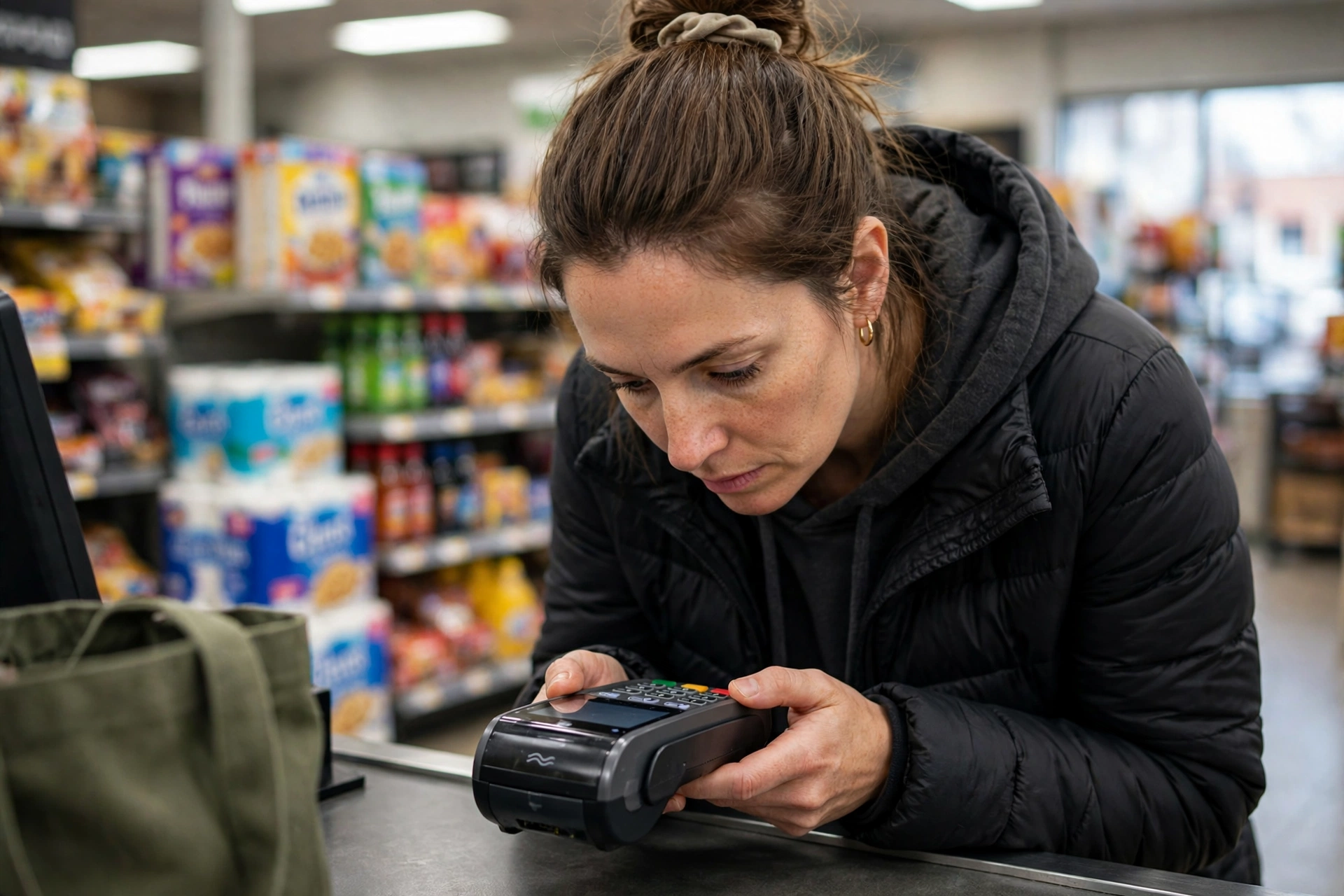
Cover the keypad every time you enter a PIN, and inspect the reader for loose or bulky parts before you swipe.
Check your balance and transactions often, using our guide to checking your EBT balance.
Mistakes And Troubleshooting
Work through this list before you assume a card problem is only a technical fault:
- Sharing a PIN. No agency asks for a PIN by text, call, or email, so any such request is a scam.
- Leaving a card unlocked. A clone can only spend while the card is unlocked, so lock it between trips.
- Ignoring small unknown purchases. A small test purchase often comes before a large drain, so report it at once.
- Assuming replacement is automatic. Federal replacement ended in December 2024, so do not plan around a refund.
- Using a lookalike app. Only the app your state agency names is official; delete any copy that charges a fee.
- Waiting to change a PIN. A new card with an old, known PIN is still open to the thief.
- Trusting a texted link. Type your agency’s address yourself, or use the number on the back of your card.
If your balance drops without a purchase you made, treat it as theft until your card service proves otherwise.
To estimate what a household may receive, try the free SNAP benefit calculator.
Frequently Asked Questions
What is EBT skimming?
Skimming is the use of a hidden device on a card reader to copy your EBT card data and PIN, so a thief can later spend your benefits with a cloned card.
Can stolen SNAP benefits be replaced now?
Benefits stolen on or after December 21, 2024 cannot be replaced with federal funds, because that federal authority expired on December 20, 2024; ask your state agency whether it offers any state-funded help.
How do I know if my card was skimmed?
Look for purchases you did not make, a balance that drops without explanation, or a card reader that felt loose or bulky, and check your transaction history often.
Does locking my card stop a cloned card?
Yes, a locked or frozen card blocks purchases, including purchases attempted with a clone, until you unlock it to shop.
Should I reply to a text saying my EBT card is locked?
No. Delete it and do not share your card number or PIN, because no genuine agency asks for those details by text, phone, or email.
Is this guide the official EBT website?
No. This is an unofficial guide. We explain the official routes and link to official sources, but we never collect card numbers or PINs.
Benefit Calendar USA is an unofficial help site. It is not affiliated with USDA, SNAP or any state agency.